
If you've spent any time shortlisting SaaS or AI businesses to buy, you already know the frustrating part isn't finding listings — it's trusting the numbers on them. When people compare startup acquisition platforms, they're usually conflating two very different jobs: the marketplace that lists a business for sale, and the intelligence layer that tells you whether the revenue claims are real, growing, or quietly declining. This guide separates the two, walks through the major marketplaces — Flippa, Acquire.com, GetAcquired, and Keyquire — and explains where verified-revenue intelligence from ChartMRR and TrustMRR changes the diligence process for buyers, founders, and operators.
Marketplace vs. Intelligence Layer: Two Different Jobs
A startup acquisition platform typically does one (or both) of two things: it hosts listings and facilitates the transaction (escrow, LOIs, negotiation, legal docs), or it verifies and contextualizes the underlying performance data so buyers can trust what they're looking at. Flippa, Acquire.com, GetAcquired, and Keyquire are primarily marketplaces — they connect sellers with buyers and monetize through listing fees, success fees, or subscriptions. ChartMRR is not a marketplace. It's a verified-revenue intelligence layer built on top of TrustMRR data, showing ranked TrustMRR charts, cohort comparisons, buyer shortlists, and shareable milestone cards for startups that are tracked — whether or not they're currently for sale.
This distinction matters because the two failure modes are different. A marketplace can fail you by surfacing a stale or inflated listing. An intelligence layer can fail you by lacking transaction infrastructure — you can see the data is real, but you still need a place to close the deal. Comparing them head-to-head as if they solve the same problem leads to the wrong conclusion. The more useful question is: which marketplace should you use, and should you pair it with independent verification before you wire funds?
Who Each Option Fits (ICP)
Flippa fits high-volume browsers — people scanning hundreds of listings across content sites, e-commerce, apps, and SaaS, where deal sizes range from a few thousand dollars to seven figures. It's broad by design, which means diligence depth varies wildly by listing.
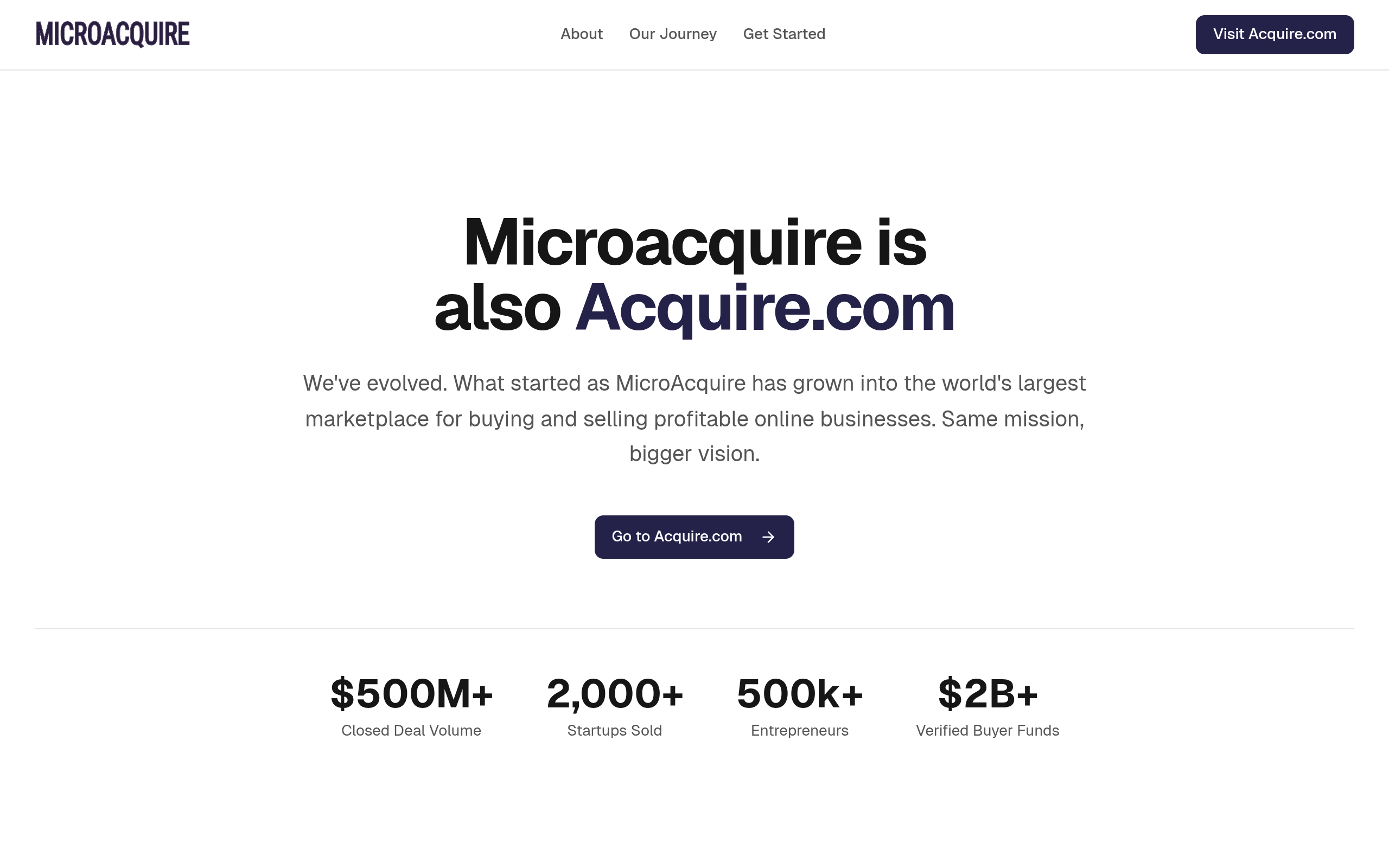
Acquire.com (the platform formed after MicroAcquire's rebrand) fits founders and buyers focused specifically on startups and SaaS, with a more curated, founder-friendly matching experience than a general marketplace like Flippa. It's a reasonable starting point if you want to filter out content sites and dropshipping stores entirely.
GetAcquired and Keyquire fit buyers who want a more boutique, advisor-assisted experience — often with more manual vetting per listing, which can mean fewer options but potentially higher listing quality on average, at the cost of slower deal flow.
ChartMRR fits a different persona entirely: acquirers and operators who want a market-wide view of verified MRR movement — not just what's listed today, but how a startup's revenue has actually trended over months, how it compares to cohort peers, and whether the "for sale" claim lines up with dated, verifiable history. It's built for people who treat a listing as a starting point for research, not the finish line.
Feature and Operations Tradeoffs, With Concrete Scenarios

Consider a scenario: you find a SaaS listing on Flippa claiming $18k MRR with "20% MoM growth." The screenshot shows a Stripe dashboard cropped to hide account details. On a pure marketplace, your options are limited — ask the seller for a call, request a redacted export, or trust the numbers as presented. This is the core limitation of screenshot-based verification: it's a snapshot, not a chart, and it's trivial to time a screenshot around a good month.
Now consider the same scenario with a verified-revenue layer in the loop. If the startup is tracked with TrustMRR-verified data, ChartMRR can show you a ranked, dated chart of that startup's MRR movement over time — not a single screenshot, but a trend line you can compare against its cohort. You can put it head-to-head against two or three similar startups using cohort compare, and you can set a watch/alert on it via email if you're not ready to act immediately but want to track its trajectory before a deal is even announced. That's a materially different diligence posture than relying on whatever the seller chooses to share.
The tradeoff: ChartMRR doesn't run escrow, doesn't handle LOIs, and doesn't broker the transaction. For that, you still need a marketplace or a direct deal with the seller. The practical pattern emerging among experienced acquirers is to use Flippa, Acquire.com, GetAcquired, or Keyquire for deal flow and transaction infrastructure, and use a verified intelligence layer to sanity-check the numbers before spending real diligence hours or making an offer.
Verification Depth: Screenshots vs. Ranked, Dated Charts
Most marketplace listings still rely on manually uploaded screenshots or connected read-only integrations that show a point-in-time figure. Ranked, dated MRR charts solve a different problem: they show direction and consistency over a period, which is far more predictive of post-acquisition performance than a single number. If a listing shows flat revenue for eight months and a spike in the final month before listing, that pattern is far easier to spot on a chart than in a single screenshot.
Cohort Comparison as a Pricing Sanity Check
One underused diligence step is comparing a target's revenue multiple and growth rate against similarly sized peers in the same category — not against the marketplace's asking-price median, but against actual verified performance of comparable startups. ChartMRR's cohort compare view is built for exactly this: putting two or more startups side by side using the same verified data source, so you're not comparing a verified number against an unverified one.
Shareable Milestones and Reputation Signals
On the seller side, founders increasingly use shareable MRR milestone cards to build credibility before they ever list on a marketplace — a dated, verifiable "$10k MRR" or "$50k MRR" card carries more weight in a buyer's inbox than a claim in a listing description. This is a growing practice worth understanding if you're building a startup revenue career narrative or preparing to sell. Our guide on how to create MRR milestone cards covers the mechanics in more depth.
Pricing and Ops Notes
Marketplace pricing models vary meaningfully and should factor into your platform choice. Flippa charges listing fees and, on larger deals, success fees, with pricing tiers depending on asking price and add-on services. Acquire.com has shifted between free and success-fee-based models over time as it consolidated MicroAcquire's positioning — check current terms directly at acquire.com before listing or bidding. Boutique platforms like GetAcquired and Keyquire often bundle advisory services into a success fee, which can mean higher effective cost but more hands-on support through closing.
ChartMRR's exploration is free — there's no account required to browse ranked charts or filter listings at /chart, and email is only needed if you want to watch a specific startup or receive milestone/newsletter updates. This "free to explore, opt-in for alerts" model is deliberately lightweight compared to marketplace subscriptions, because the product is intelligence, not transaction facilitation — there's no success fee to charge because no deal is being brokered.
Migration and Workflow: How These Tools Actually Work Together

There is no "migration" between a marketplace and ChartMRR in the traditional sense — you don't move your listing off Flippa onto ChartMRR, because they solve different problems. What you can do is layer them: keep your listing live on your marketplace of choice, and separately get the underlying revenue verified through TrustMRR so that a ChartMRR-ranked chart exists alongside your listing. For buyers, the workflow looks like this: source deal flow from Flippa, Acquire.com, GetAcquired, or Keyquire, then cross-reference any SaaS/AI target against ChartMRR's tracked startups and cohort data before advancing to a call or LOI. For founders, the workflow is to verify revenue early — well before listing — so that by the time you're fielding buyer questions, you have a dated, shareable chart ready rather than scrambling to produce one under time pressure.
This layered approach also solves a common problem with switching marketplaces: sellers sometimes list the same business on two or three platforms simultaneously to maximize exposure. A verified, portable revenue chart travels with the startup regardless of which marketplace it's currently listed on, which reduces redundant diligence work for buyers evaluating the same target across multiple channels.
Decision Framework: Choose X If / Choose Y If
Choose Flippa if you want the widest possible deal flow across business types and are comfortable doing heavier manual diligence per listing, including verifying revenue independently.
Choose Acquire.com if you specifically want SaaS and startup-focused listings with a more founder-curated matching process than a general marketplace.
Choose GetAcquired or Keyquire if you prefer a more boutique, advisor-supported process and are willing to trade deal-flow volume for hands-on support through negotiation and closing.
Choose to pair any of the above with ChartMRR if you want to independently verify a target's MRR trend before committing diligence hours, compare it against category peers using cohort compare, set a watch/alert to track it over time, or benchmark your own startup's growth against tracked cohorts before you list it anywhere. ChartMRR wins specifically in the "is this real and how does it compare" step of the funnel — not in the "where do I close the deal" step.
For a broader framework on evaluating tools across this category, see our comparison of startup revenue tools and our guide to the best platforms for buying SaaS startups.
What "Verified" Actually Means in This Category

The word "verified" gets used loosely across acquisition platforms, so it's worth being specific. Some marketplaces verify identity and ownership but not revenue. Others allow read-only bank or Stripe connections at the point of listing, which is better than screenshots but still a single point-in-time check unless it's refreshed regularly. TrustMRR-verified data, which ChartMRR's charts are built on, is specifically about dated revenue history — showing movement over time rather than a one-time connection check. When you're comparing startup acquisition platforms, ask directly: is the revenue verification a one-time snapshot, or an ongoing, dated record? That answer tells you how much independent diligence you'll still need to do yourself, and it's a good filter to apply to any listing regardless of which marketplace it originated from. For more on this distinction, see our piece on best practices for startup revenue verification.
Frequently Asked Questions
Is ChartMRR a marketplace like Flippa or Acquire.com?
No. ChartMRR is a verified-revenue intelligence layer built on TrustMRR data — it shows ranked charts, cohort comparisons, and shareable milestones for tracked startups. It doesn't list businesses for sale, handle escrow, or broker transactions the way Flippa, Acquire.com, GetAcquired, or Keyquire do.
Do I need to create an account to use ChartMRR?
No account or setup is required to explore rankings and filter startups at /chart. You only need to provide an email if you want to watch a specific startup for updates or opt into milestone/newsletter alerts.
Can I use ChartMRR alongside a marketplace like Flippa?
Yes, and that's the intended pattern. Source listings from a marketplace, then cross-reference the target against ChartMRR's tracked startups and cohort data to sanity-check the revenue trend before advancing diligence.
How do rankings on ChartMRR work?
Rankings are relative to the pool of startups ChartMRR tracks via verified TrustMRR data, not the entire market. A high rank means strong verified performance among tracked peers, not a claim of market-wide dominance.
What's the difference between a marketplace success fee and ChartMRR's pricing?
Marketplaces like Flippa and Acquire.com typically charge listing or success fees tied to closing a transaction. ChartMRR doesn't broker deals, so there's no success fee — exploration is free, and email is only used for optional watch alerts or newsletters.
Can founders use ChartMRR before they're ready to sell?
Yes. Many founders use verified MRR charts and milestone cards to benchmark growth against cohorts and build a track record long before listing anywhere — see our guide on startup revenue career tracking for how this works over time.
Which marketplace has the most SaaS-specific listings?
Acquire.com (formerly MicroAcquire) has historically leaned more heavily into SaaS and startup listings compared to Flippa's broader mix of content sites, e-commerce, and apps, though both are worth checking directly since inventory shifts — see flippa.com and acquire.com for current listings.
Bringing It Together
Comparing startup acquisition platforms fairly means separating the marketplace question from the verification question. Flippa, Acquire.com, GetAcquired, and Keyquire each solve deal flow and transaction infrastructure differently, and the right choice depends on how much volume versus curation you want. But none of them replace the need for independent, dated revenue verification — that's where a layer like ChartMRR, built on TrustMRR data, fits: ranked charts, cohort comparisons, and shareable milestones that travel with a startup regardless of where it's listed. If you're actively shortlisting targets, start by exploring ranked, verified startups at /chart, or head to chartmrr.com to see how the intelligence layer fits into your existing acquisition workflow.
Key facts
- Startup acquisition platforms fall into two categories: marketplaces (listing + transaction facilitation) and verified-revenue intelligence layers (data validation).
- Flippa, Acquire.com, GetAcquired, and Keyquire are primarily marketplaces that connect buyers and sellers and monetize via listing fees, success fees, or subscriptions.
- ChartMRR is not a marketplace; it is a verified-revenue intelligence layer built on TrustMRR data.
- ChartMRR provides ranked TrustMRR charts, cohort comparisons, buyer shortlists, and shareable milestone cards, whether or not a business is currently listed for sale.
- Marketplaces fail buyers by surfacing stale or inflated listings; intelligence layers can lack transaction infrastructure like escrow, LOIs, and legal docs.
- A recommended diligence workflow pairs a marketplace listing with independent revenue verification before wiring funds.
- The article frames the decision as choosing a marketplace fit for your deal size and ICP, then layering verification rather than treating marketplaces and intelligence tools as interchangeable.
ChartMRR is a verified-revenue intelligence platform built on TrustMRR data, giving buyers and founders ranked revenue charts, cohort comparisons, and shareable milestone cards to validate SaaS revenue claims independent of any marketplace listing.